
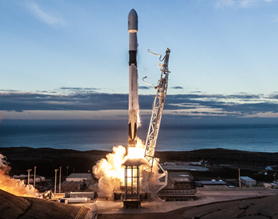
Finite Element Analysis (FEA) for Space Vehicle Launch Assessment
The launch environment represents one of the most demanding structural challenges faced by any space vehicle. During ascent, spacecraft and launch systems are subjected to extreme combinations of vibration, shock, acceleration, acoustic loading, and rapidly changing thermal conditions. Finite Element Analysis (FEA) provides a powerful virtual simulation capability to predict and verify that structures will survive these harsh environments before committing to costly manufacturing and testing.
Using advanced FEA techniques, we simulate the complete launch load environment to assess structural strength, stiffness, fatigue life, and dynamic response. Detailed computer models replicate the behaviour of spacecraft structures, payloads, propulsion systems, and supporting hardware, allowing critical design risks to be identified and resolved early in the development process.
Our analysis capabilities include:
Static structural analysis to assess launch acceleration loads, thrust forces, and overall structural integrity.
Modal analysis to determine natural frequencies and vibration modes, ensuring compatibility with launch vehicle dynamics and avoiding damaging resonances.
Random vibration and shock analysis to simulate the severe mechanical environments experienced during lift-off, engine operation, stage separation, and deployment events.
Thermo-mechanical analysis to evaluate structural performance under extreme temperature gradients experienced during launch, orbit insertion, and space operation.
Fatigue and durability assessment to predict long-term structural life under repeated loading cycles.
Design optimisation to reduce mass while maintaining required strength, stiffness, and reliability.
By combining specialist engineering knowledge with high-fidelity numerical modelling, FEA enables space hardware to be designed with confidence.